
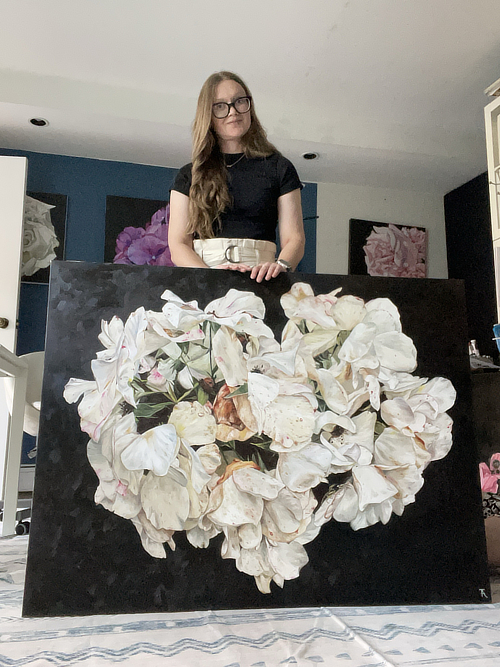
Tell us how you first became interested in creating art.
My earliest memory of art is tied to my father, who was studying architecture. As a toddler, I took one of his precise hand-drawn plans and treated it like a colouring book... Instead of being angry, he quietly erased my additions overnight. That moment stayed with me - not as a reprimand, but as an early lesson that curiosity and creativity can coexist. I’ve been drawing and observing ever since.
Which artists or movements have influenced you?
I have always been drawn to realism and classical traditions. As a child, I was fascinated by botanical illustrations and precise line drawings from old books. The discipline, structure, and expressive restraint of classical art continue to influence my work, particularly the balance between accuracy and emotion found in the old masters.
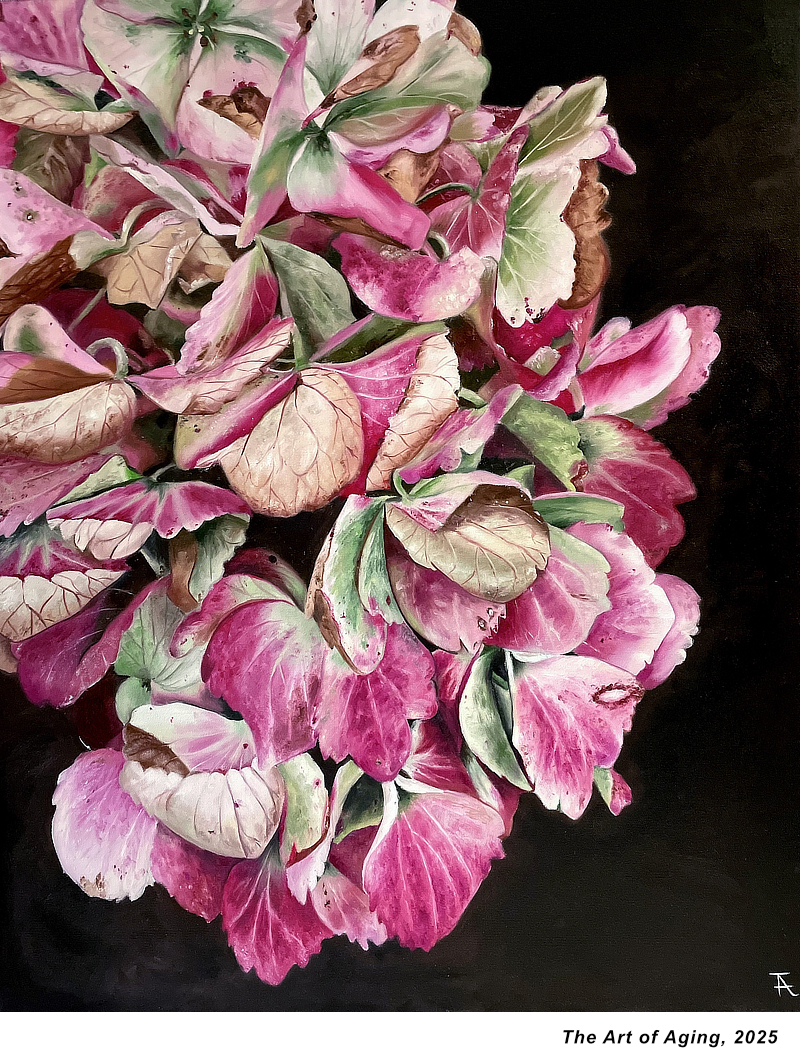
I’m drawn to imperfections—aging petals, uneven forms, signs of decay—and use them to reflect human emotions such as loss, resilience, and survival
How would you describe your artistic style? What inspires you?
My work is painterly realism with a contemporary sensibility. I’m drawn to imperfections—aging petals, uneven forms, signs of decay—and use them to reflect human emotions such as loss, resilience, and survival. Each painting is a quiet dialogue.
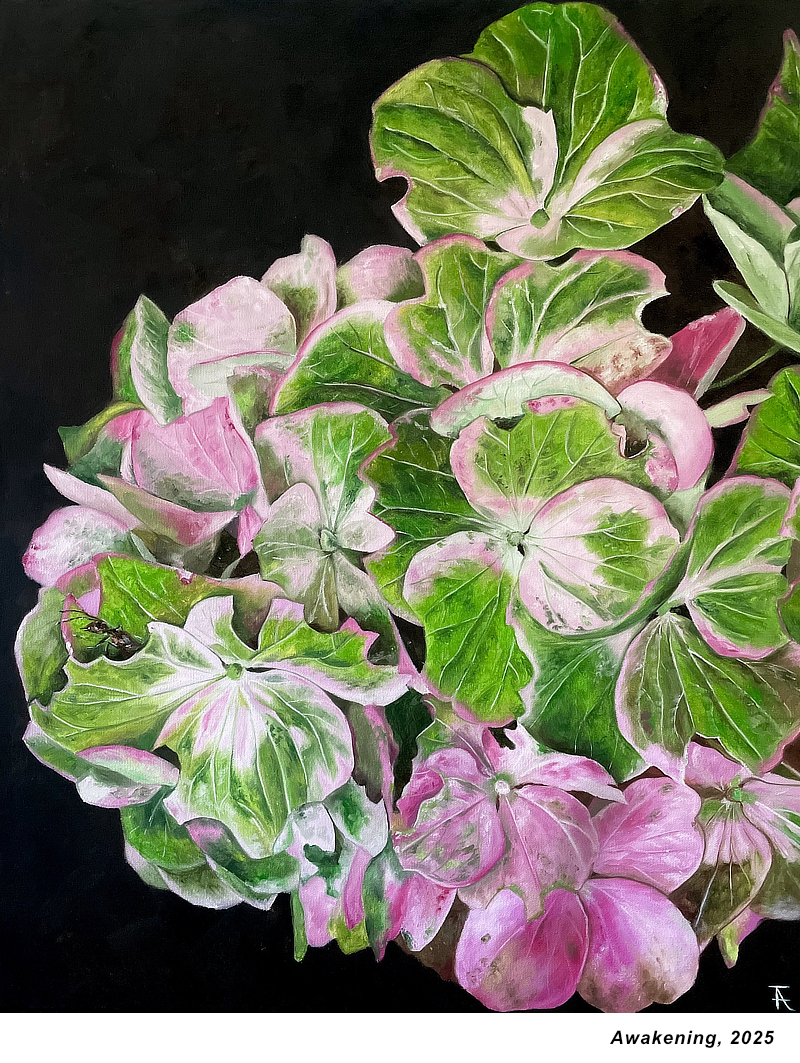
My Flowers Speak series uses flowers to explore human emotions, transforming botanical forms into meditations on fragility, resilience, and renewal. Working in oil on a deep, dark background, I paint from my own photographs, capturing imperfect moments that hold the truth. My background in biology informs the precision and authenticity of the organic details, while artistic vision transforms these forms into deeply felt emotional narratives. My work invites viewers to appreciate beauty not for its flawlessness, but for the strength born from endurance. Awakening, the heart of my collection, is dedicated to cancer survivors. The hydrangeas are uneven, bitten, imperfect-but they reach upward, alive and resilient. It holds the essence of my Flowers Speak series: even when wounded, life persists.
What is your favourite art accident?
Working in watercolor as my primary medium, taught me to embrace unpredictability. Some of my favorite effects emerged when pigments merged unexpectedly, granulated and creating textures I couldn’t plan. Those moments shifted my thinking-control matters, but so does allowing materials to speak.
What is the most important thing about art to you?
Art is a conversation. It isn’t passive—it responds, questions, and supports. For me, its value lies in its ability to slow the viewer down and create an emotional connection that words often can’t.
How do you promote your art?
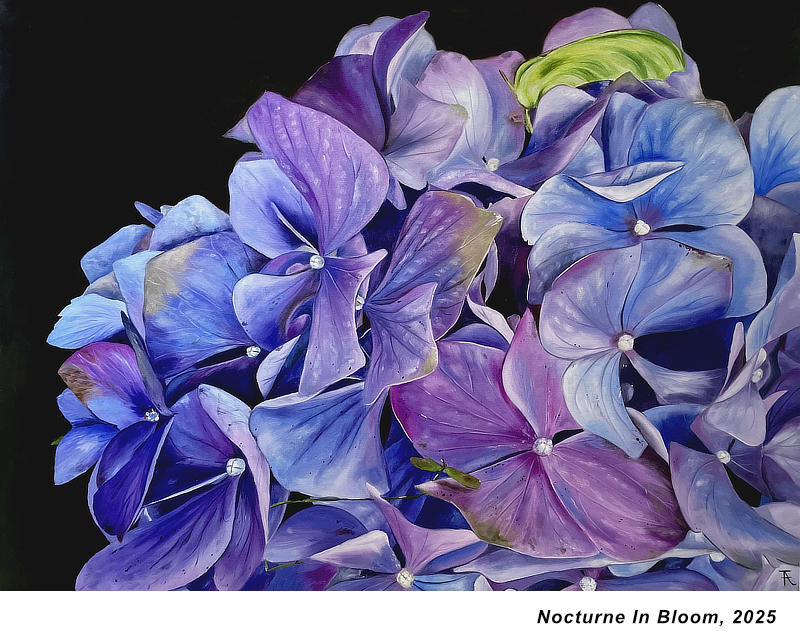
I’m represented by Ian Tan Gallery in Vancouver and am an active member of international organizations such as NOAPS and OPA. I combine traditional exhibitions with social media, allowing my work to reach both collectors and a broader public while keeping the physical experience of viewing art central.
What is missing from the contemporary art market?
The contemporary art market is a space of constant transformation. Historically, classical art has had to adapt in response to technological innovations—from the introduction of photography to the rise of digital art, and more recently, artificial intelligence. While these shifts challenge traditional methods and expectations, I believe that classical techniques and values continue to hold relevance. They are adaptable, resilient, and, ultimately, enduring. At the same time, the market often overlooks the subtleties of craftsmanship and the quiet emotional depth that classical approaches can bring, favouring novelty over nuance. For me, there is a responsibility as an artist to maintain these traditions while engaging with contemporary trends in thoughtful ways.
What are you working on now?
I’m currently developing a new body of work focused on native plants of British Columbia. The project combines scientific observation with emotional storytelling, exploring themes of fragility, preservation, and our connection to the natural world.