Tell us how you first became interested in creating art.
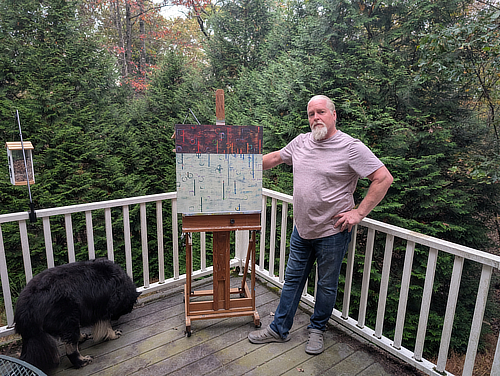
Art was woven into my upbringing. My mother, an artist and passionate collector of art books, filled our home with visual inspiration. Growing up in the Washington, D.C. area, I spent countless hours immersed in the city’s museums, absorbing the language of form and color. In high school, I began to take art seriously, experimenting with oil painting, printmaking, and sculpture. Though my early career led me through creative fields—seven years in landscape design and a decade as a chef and restaurateur—art remained a constant undercurrent. It wasn’t until my late 30s that I formally returned to academia, earning two BFAs and eventually an MFA. Teaching art and film marked the moment I fully stepped into the professional art world.

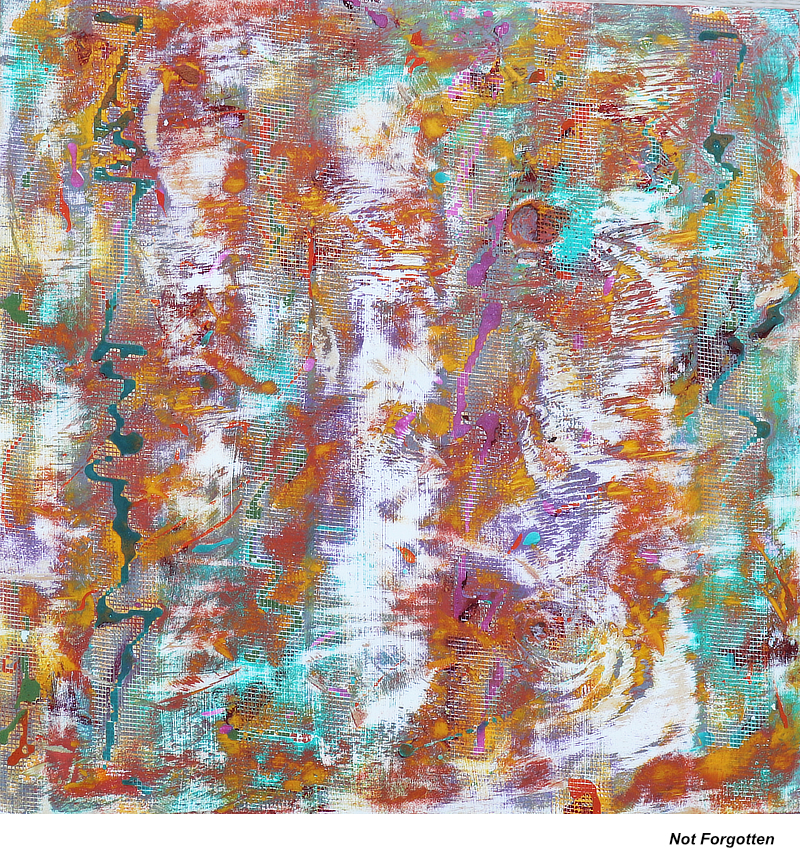
My current work is rooted in non-objective abstraction, driven by a fascination with the interplay between control and chance
Which artists or art movements have influenced you?
My influences have evolved alongside my practice. Early on, I was captivated by the poetic stillness of Georgia O’Keeffe, the cinematic solitude of Edward Hopper, and the surreal provocations of Salvador Dalí. Later, I gravitated toward the conceptual daring of Duchamp, the material experimentation of Robert Rauschenberg, and the linguistic play of Joseph Kosuth. Today, I’m drawn to artists who embrace complexity and layering—Julie Mehretu’s frenetic mappings, Mark Bradford’s urban excavations, Elliott Hundley’s assemblage intensity, and Paul Chiang’s meditative abstractions all resonate deeply with my own sensibilities.
For me, art is a portal into Flow—a state where time dissolves and intuition takes the lead
How would you describe your artistic style? What inspires you?
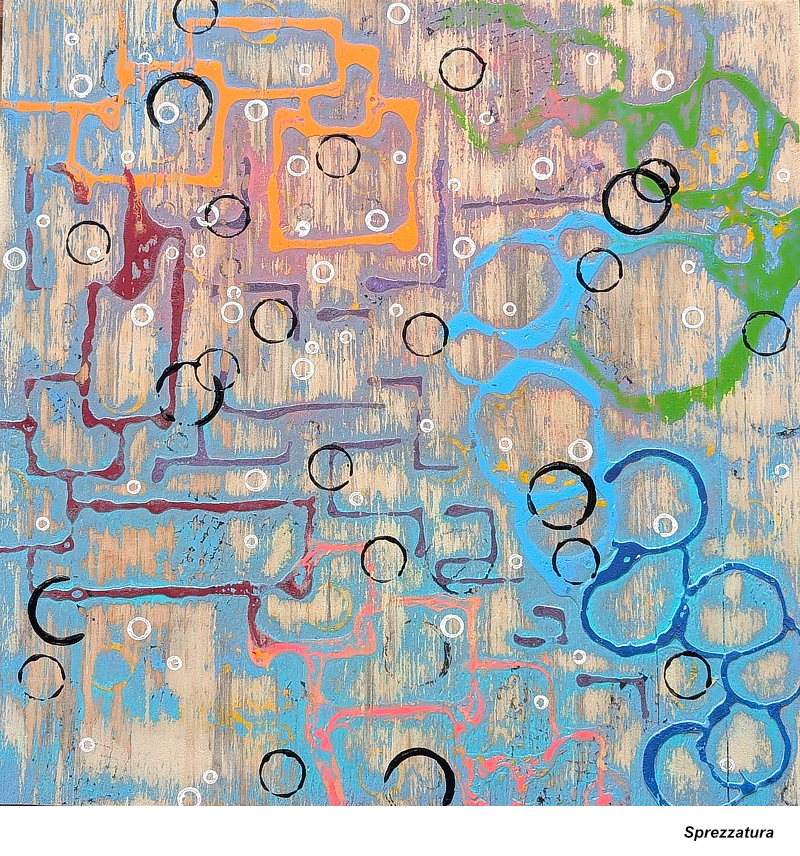
My current work is rooted in non-objective abstraction, driven by a fascination with the interplay between control and chance. I build compositions on wood panels using acrylics, adhesives, and unconventional materials, applying and subtracting with both traditional tools and industrial implements—drills, sanders, grinders—anything that allows me to physically engage with the surface. The result is a layered aesthetic where each stratum bears the imprint of decision, revision, and raw energy. I want viewers to feel the labor, the emotion, the tension between intention and surrender.
This process is a meditation on agency. I often ask: How much control do we truly possess? We make choices, set things in motion, yet outcomes often elude us. My work lives in that space—the push and pull between order and entropy.
What is your favorite art accident? Did it change your perspective?
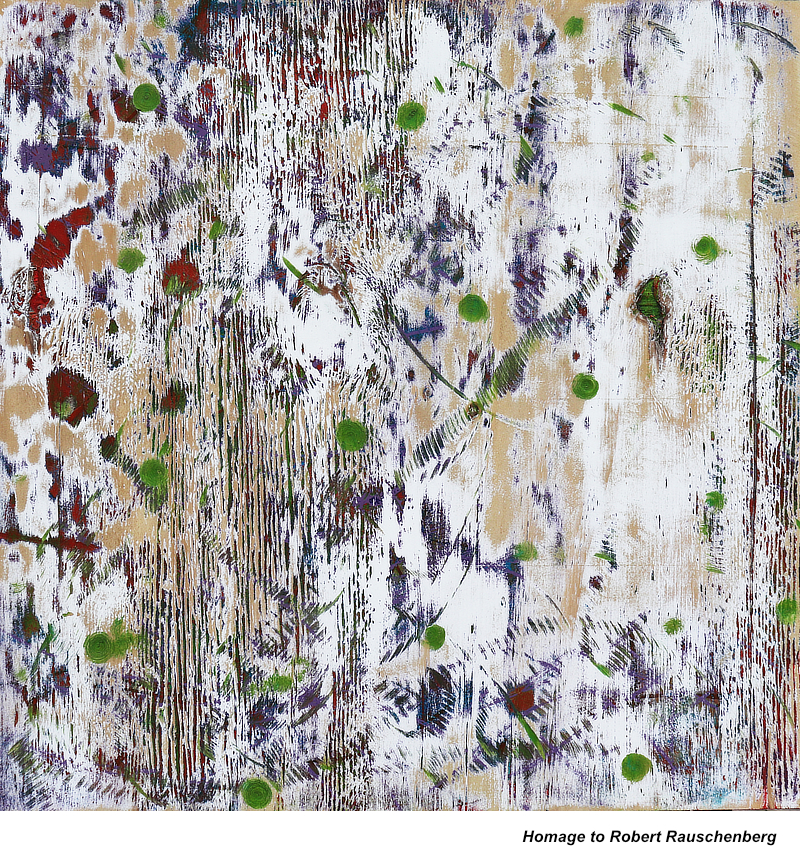
It wasn’t a single moment, but a series of experiments that led me here. After years of working figuratively, I ventured into abstraction, but the results felt unresolved. Then I recalled Robert Rauschenberg’s “Erased de Kooning”—his radical act of erasure as creation. Inspired, I began “erasing” my own unsatisfying works, sanding, scraping, and reworking the surfaces. What emerged was unexpectedly compelling. That act of removal became a generative force, and I’ve been exploring its possibilities ever since.
What is the most important thing about art to you?
For me, art is a portal into Flow—a state where time dissolves and intuition takes the lead. When I’m working, hours vanish. It’s my sanctuary, my way of being fully present. On a societal level, art offers a safe space for emotional expression and connection. It allows artists to externalize their inner worlds, and it invites audiences to engage with those worlds, even in the artist’s absence. Art builds bridges across time, culture, and experience.
How do you promote your art?
Promotion is an ongoing challenge, especially living in a remote part of Virginia. I maintain a personal website, participate in national competitions, and share my work on platforms like Instagram and Pinterest. I’m also active on several art-market sites. That said, I believe the most powerful form of promotion is genuine connection—networking with fellow artists, curators, and collectors. Building relationships within creative communities is essential, even if geography makes it more complex.
What is missing from the contemporary art market? What problems do you see in contemporary art right now?
The contemporary art market often overlooks emerging voices in favor of spectacle—auction headlines and celebrity-driven narratives dominate.
I believe there’s a missed opportunity to democratize art collecting, to connect middle-class families with artists whose work speaks to them. Ireland’s recent pilot program offering a basic income to artists is a compelling model: it boosted creativity, reduced welfare dependency, and even generated net economic gains. We need more initiatives like this—programs that recognize the cultural and economic value of supporting artists sustainably.
What are your plans? What are you working on now?
I plan to continue evolving my practice through experimentation. Each sketch or painting sparks new ideas—techniques, aesthetics, conceptual threads. Recently, I’ve begun integrating woodworking into my mixed-media pieces, exploring how structure and surface can coalesce. I’m also pursuing artist residencies to disrupt my routine and engage with new communities. That kind of creative friction—being in unfamiliar environments—often leads to breakthroughs. I’m excited to see where it takes me.